Rising material costs, supply chain disruptions, and the high cost of downtime are pushing industries to move away from replacing parts toward repairing them. In sectors like energy, aerospace, and tooling, components are expensive and often only partially worn, making full replacement inefficient.
Repair has become a key strategy to extend component life, reduce costs, and support sustainability goals aligned with circular economy principles.
1. Why Additive Manufacturing is transforming repair
Additive manufacturing enables precise, localized repair by adding material only where needed, improving efficiency and reducing waste. Combined with technologies like 3D scanning and digital twins, it allows for highly controlled and repeatable repair processes.
This shifts maintenance from reactive to predictive, making repair faster, more flexible, and better integrated into modern industrial workflows. It also makes companies less dependent on an aging skilled workforce, translating human knowledge into machine parameters.
TIP: Discover how our process can achieve 99.97% relative density.
2. Overview of additive repair technologies
Additive technologies for repair applications
Several additive technologies are currently used in repair applications, each with distinct strengths and limitations.
WAAM: High deposition rate, low precision, high post-processing, high thermal impact, and part deformation
Cold Spray: Minimal heat input, limited bonding strength.
Powder-based LMD: High accuracy, high cost and operational complexity, and high safety requirements.
Where Wire Laser Additive Manufacturing fits
Wire Laser Additive Manufacturing offers a balanced solution among existing repair technologies, combining the cleanliness and simplicity of wire feedstock with strong process control and stability. It avoids the complexity of powder-based systems while ensuring excellent bonding between the base material and the deposited metal, supported by precise energy input.
Additive manufacturing is changing how industrial repair is performed, shifting it from manual, inconsistent processes to controlled and repeatable operations.
Key advantages of additive manufacturing in repair
- Extended component life: restore parts instead of replacing them
- Process automation: reduce manual intervention and variability
- Cost reduction: lower material use and spare part inventory
- Reduced downtime: faster turnaround than replacement
- Material efficiency: add material only where needed
- Design flexibility: repair complex or hard-to-access areas
- Sustainability: reuse high-value components
- On-demand repair: reduce dependency on supply chains
Up to 40% in cost savings compared to traditional manufacturing
3. Meltio WLAM for Repair industry
Meltio technology builds on the advantages of wire-based laser deposition to deliver a robust and industrial-ready solution for metal repair.
Its combination of a multimaterial – coaxial wire feedstock and laser energy enables stable, controlled deposition with strong metallurgical bonding to the base material.
Meltio process control system
The Meltio process control system continuously monitors material deposition and dynamically adjusts wire feed to maintain stability. This real-time adaptation helps compensate for surface variations and reduces sensitivity to toolpath precision, improving robustness in real repair conditions.
Controlled energy distribution / Low heat affected zone
Laser-based energy delivery allows precise thermal control during deposition, significantly reducing the heat-affected zone. This is critical for maintaining base material properties / structural integrity and minimizing distortion in high-value or previously damaged components.
Multi-material and cladding capabilities / width range of alloys
Meltio technology enables selective material deposition, allowing different alloys to be applied depending on the functional requirements of each repair zone.
The system has been validated with a wide range of materials for cladding and repair applications:
Hardfacing materials
Designed for wear resistance in demanding mechanical environments such as abrasion, impact, and cutting applications.
Includes: tool steel H11, Stellite 6, Stelloy 21, T Fe15, NiCarbW, AISI M7 (cutting tools and high-wear components).
Thermal and corrosion-resistant alloys
Used in environments exposed to high temperatures, oxidation, or aggressive chemical conditions.
Includes: Inconel 625, Inconel 718.
White metals
Used in low-friction and anti-seizure applications, particularly in sliding or bearing surfaces.
Includes: Babbitt alloys.
Low dilution printed – Based Material
Meltio’s technology enables a low-dilution deposition process between the added material and the base substrate, which is critical for maintaining the integrity of the original material properties.
This is particularly important in repair applications, as excessive intermetallic formation can negatively affect mechanical performance, leading to brittleness or reduced fatigue resistance.
As a result, the process helps preserve the metallurgical quality of both the deposited material and the underlying component, ensuring more reliable and predictable mechanical behavior after repair.

TIP: Not familiar with Wire-Laser Deposition yet?
4. Industrial repair use cases
Wire Laser Additive Manufacturing is already being applied across industries where downtime, wear, and supply chain limitations have a direct operational impact. The following examples illustrate how Meltio Technology enables repair and component restoration in real industrial environments.
1. Glass mold restoration (Tooling Industry)
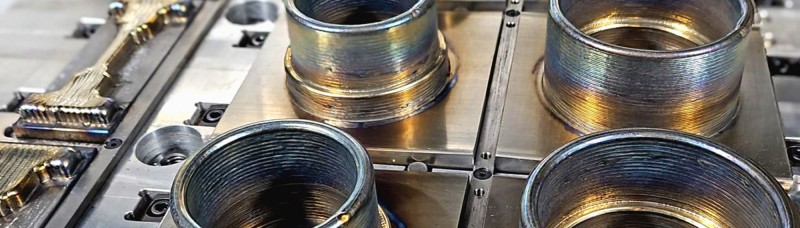
Glass manufacturing relies heavily on Inconel molds that are exposed to extreme thermal cycling and localized wear during continuous production. Over time, degradation typically appears at edges and joint interfaces, affecting dimensional accuracy and performance.
Traditionally, repairing these components using conventional welding methods is challenging due to the high thermal stresses involved, often requiring extensive preheating and controlled cooling to avoid cracking or distortion. This results in long repair cycles and high operational costs.
A hybrid CNC system equipped with a Meltio Engine replaced manual welding with Wire LMD, applying stainless steel buffer layers directly onto the worn Inconel surfaces. The controlled energy input enabled stable deposition and reduced the risk of thermal damage.
77% reduction in repair lead time
Reduced post-machining time (11 vs 20 minutes per unit)
Improved bond quality with lower porosity
2. Trencher segment Hardfacing (Construction & Agriculture)
Trencher cutting segments operate in highly abrasive environments, where soil, rock, and debris cause continuous wear. To extend service life, hardfacing is applied to reinforce only the most exposed areas.
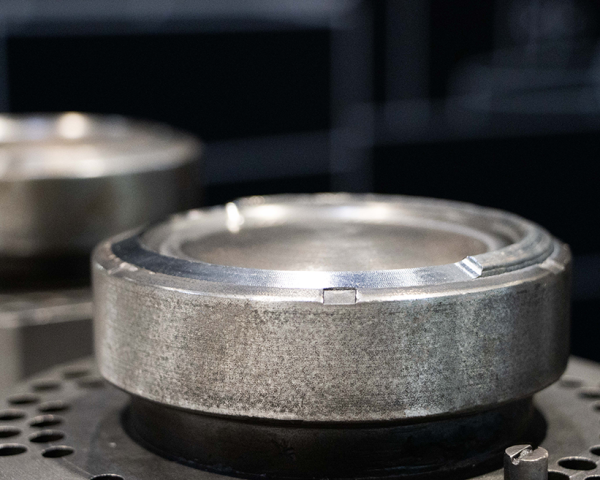
Materials such as tungsten carbide reinforced nickel matrices (e.g., NICARBW-LD) provide high abrasion resistance while maintaining sufficient toughness to avoid brittle failure.
Increased wear resistance in extreme conditions
Extended component lifetime
Reduced maintenance and downtime
Lower total operational cost
3. Large-scale bearing systems manufacturing and repair (Heavy Industry)
Heavy industry relies heavily on massive rotating equipment, but traditional manufacturing methods like casting or machining solid metal blocks historically created up to 80 percent material waste. These conventional processes also imposed severe bottlenecks and long delivery lead times for oversized, heavy-duty parts.
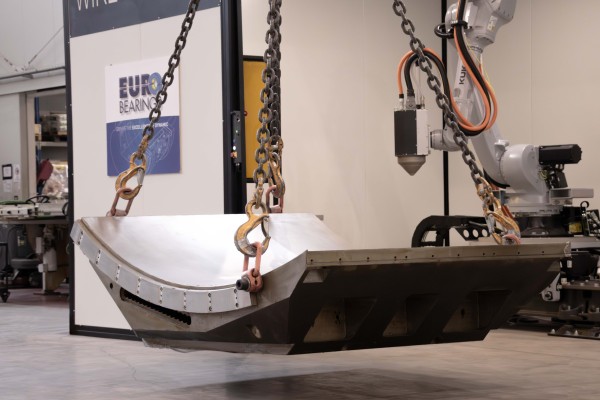
To eliminate these constraints, Eurobearings implemented the Meltio Engine Robot Integration, featuring a large KUKA industrial robot on a mobile gantry to expand the working envelope for large component sizes. By adopting this near-net-shape printing process using standard welding wire as clean feedstock, the engineering team can now print directly onto existing parts to rehabilitate high-value components.
30 to 50% reduction in production lead time
Achieved by Eurobearings after incorporating Meltio's technology
Reduced raw material consumption and lowered the overal cost per component
Enabled rehabilitation of heavily worn, high-value components
Provided a stable industrial process with high repeatability
Significantly lowered the company's environmental footprint
4. Tool refurbishment in hot forging (Tooling Industry)
Cavaletto Mario S.p.A. specializes in hot forging, managing the production of over 5,000 different parts, requiring constant maintenance for trimming dies and punches due to wear. The company historically relied on a single highly skilled veteran welder, creating a strict bottleneck due to labor shortages and the difficulty of training new operators to manually repair thousands of distinct tooling geometries. Conventional automated solutions like continuous wire welding were unfeasible for the complex geometries, and traditional manual electrode welding generated slag, disrupting process continuity.
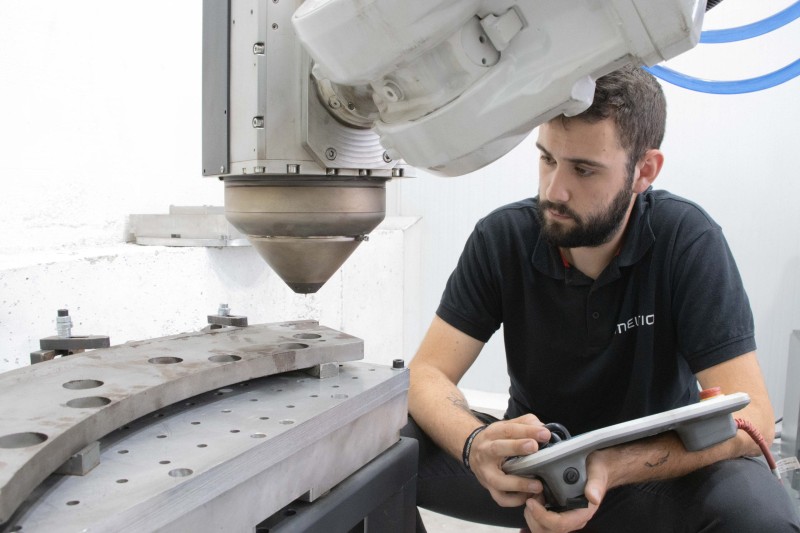
Cavaletto adopted wire-laser welding via the Meltio Robot Cell to automate the repair of trimming equipment, effectively translating human expertise into machine parameters. The precise manufacturing workflow includes machining reference features, machining away the damaged weld, Meltio deposition using specific welding wire, machining the upper surface flat, and final cutting using wire-cut EDM.
67% in cost savings compared to traditional electrode welding
20% savings comparing the complete conventional mold manufacturing technique
Achieved by Cavaletto after incorporating Meltio's technology
Gained consistent material deposition, improved accuracy, and strict repeatability
Achieved an estimated 67% material savings compared to traditional electrode welding
Conclusion
Wire Laser Additive Manufacturing (WLAM) represents a decisive shift in maintenance strategy, moving industries away from costly component replacement toward efficient, sustainable repair. The shift is driven by the necessity to extend component life, reduce material consumption, and mitigate downtime in critical sectors.
Meltio WLAM technology provides an industrial-ready solution, combining the cleanliness of wire feedstock with precise process control, resulting in strong metallurgical bonding, low heat affected zones, and multi-material versatility. As demonstrated by industrial applications:
- Companies like Eurobearings leverage the technology for near-net-shape manufacturing and repair of oversized components, drastically reducing lead times by 30 to 50 percent and lowering raw material consumption in heavy industry.
- In the tooling sector, Cavaletto Mario S.p.A. successfully automated the challenging repair of complex forging dies, eliminating bottlenecks caused by reliance on specialized manual labor. This transition yielded significant operational improvements, including 20% cost savings and 67% material savings compared to traditional electrode welding, while ensuring high repeatability.
By enabling precise, repeatable, and cost-effective restoration of high-value parts, WLAM fortifies competitive advantage and supports circular economy principles across industries from tooling to heavy equipment, confirming its role as the future of metal component maintenance and manufacturing.
TIP: Ready to take the next step? Check Meltio for Repair.
FAQs
Wire LMD technology is not limited to a fixed material set. While Meltio offers a validated range of Meltio Materials, the system is compatible with a wide variety of metallic wires. In fact, numerous third-party alloys have been successfully tested and validated for different industrial repair applications.
Because the process creates a full metallurgical bond rather than a mechanical adhesion, the repaired section typically exhibits 99.9% density. Mechanical properties generally match or exceed standard cast or wrought materials of the same alloy.
Yes. Wire LMD builds to a near net shape, meaning the deposited material is very close to the final geometry. A light CNC machining or grinding pass is required to achieve strict surface tolerances and smooth finishes.
Wire LMD requires line of sight for the lasers and wire feed. Internal cracks cannot be repaired unless the part is machined down to expose the defect, filled via LMD, and then machined back to specification.
Industries with high-value and critical components benefit the most, including energy, oil & gas, aerospace, tooling, and heavy industry, where downtime and replacement costs are significant.
Yes, Meltio technology enables multi-material deposition, allowing hardfacing layers or corrosion-resistant materials to be applied selectively over structural substrates depending on application requirements.
The part centering process depends on the system configuration being used. In the M600 and hybrid setups, centering follows standard CNC milling machine protocols, ensuring a familiar and consistent alignment approach for users of conventional machining environments.