



A vehicle stranded in the field does not wait for a supply chain to catch up. During an international military exercise, a British Army Land Rover needed a replacement brake pedal, the kind of part that normally means a requisition, a wait, and a unit sitting still until the spare arrives.
Producing a replacement fast is only half the problem. A brake pedal carries real load every time a driver presses it, and nobody bolts an unverified part onto a vehicle headed back into the field. The question this exercise set out to answer was whether a metal 3D printed replacement could be manufactured and proven strong enough, on site, inside the same operational window.
“In future warfare, the force that can manufacture at point of need will outlast the force that can only resupply.
Expeditionary manufacturing reduces the supply lines by placing industrial capability where it is needed, increasing resilience, responsiveness and operational endurance.”Major Rich Cummings
Equipment Support, Capability Directorate, British Army HQ
1. A broken part and a supply chain too slow to help
For military logistics, a failed component is rarely just a broken part. It is a vehicle pulled from service, a maintenance backlog, and a unit that loses mobility until a spare works its way through the system. Land Rover platforms have been in service across allied forces for decades, and legacy components for older vehicles are not always easy to source quickly, especially mid-exercise or mid-deployment, far from a home depot.
Waiting weeks for a single mechanical part is a poor trade when mission readiness is what is actually at stake. The British Army needed to know if there was a faster way to keep this class of vehicle running without leaning on a slow, distant supply chain.


Original Part
Meltio Replacement
2. A part that has to survive mud, load, and a tight clock
A brake pedal is a deceptively demanding part to reproduce: a shaped main body with mounting protrusions that have to hook precisely onto the vehicle, built to take repeated, high-cycle loading every time the vehicle is driven. Add mud, moisture, and constant mechanical stress in the field, and the part needs real fatigue resistance and corrosion protection well beyond what a single bench test would confirm.
Then there is the harder problem: proving it. Conventional tensile testing means cutting a sample, shipping it to a lab, and waiting on a report, a timeline that has nothing to do with an exercise clock. Hardness testing is faster but only gives a rough proxy for strength, not the actual yield strength or ultimate tensile strength a maintenance officer needs before signing off on a safety-relevant part. Speed without verification was not something the British Army could actually use.
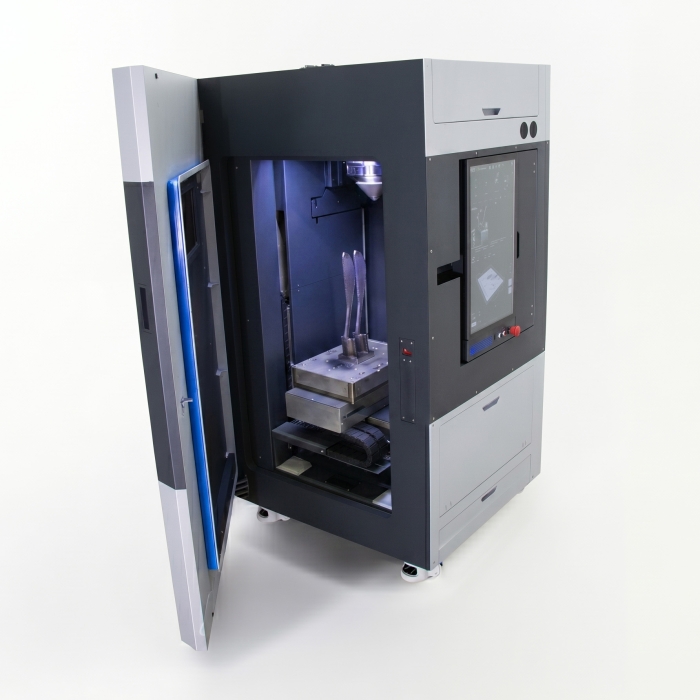
Meltio’s M600 uses Wire-Laser Metal Deposition (W-LMD) to build metal parts from standard welding wire instead of powder, which is what makes it practical to run in a field or expeditionary setting in the first place: no hazardous powder handling, no controlled-atmosphere room, just industrial-scale deposition with automation wherever the machine is set up.
Printing the part
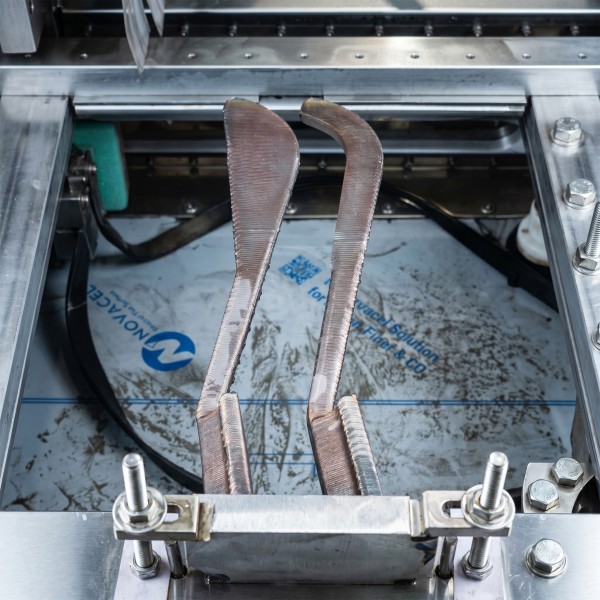
The Meltio M600 printed the complete Land Rover brake pedal in 17-4PH stainless steel, an alloy chosen specifically for its fatigue resistance, high ultimate tensile strength, and corrosion resistance, the three properties that matter most for a part that lives in mud. The workflow printed the full main body first, then the supports were cut away, and the specific protrusions needed to hook the pedal onto the vehicle were added afterward. Total manufacturing time: 16 hours, start to finish, in the field.
Testing the mechanical properties
Printing the part was only the first half of the story. To close the loop on verification without shipping anything to a distant lab, Meltio paired the M600 with Plastometrex’s Profilometry-based Indentation Plastometry (PIP) testing, run on the compact PLX-Benchtop. PIP pulls real mechanical properties, rather than a hardness proxy, from a small indentation test, and it generated a full ASTM E3499-compliant mechanical properties report in 15 minutes, on site, next to the printer that made the part. Producing and verifying a spare part at the point of need, on the same day, is what this exercise actually demonstrated.
“Producing a replacement part is only the first step. Rigorous validation ensures that additively manufactured components deliver the performance and reliability required in the field.”
Giorgio Olivieri
Meltio’s Applications Director
3. A part that beat the original, proven in minutes
16 hours to manufacture the replacement in the field
15 minutes to generate an ASTM-compliant mechanical properties report
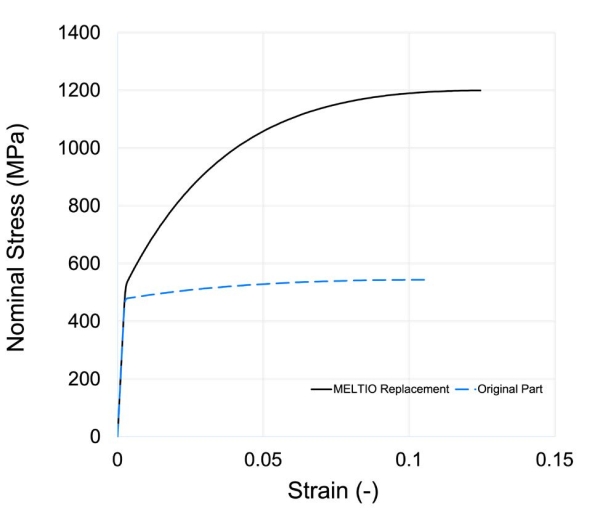
Yield strength 9 percent above the original part
Ultimate tensile strength 120 percent above the original part
4. What it means going forward
That gave the Ministry of Defence something more valuable than a fast part: quantitative confidence that the printed pedal could handle the vehicle’s real service loads and go straight back into operation, instead of sitting in a queue waiting for a lab-tested replacement to arrive from somewhere else.
Expeditionary manufacturing does not remove supply lines from the picture, but it shortens the distance between a broken part and a working vehicle from weeks to hours. What it was demonstrated goes beyond one brake pedal: a repeatable workflow, print and verify, both on site, both fast enough to fit inside an operational tempo instead of around it. That pairing is part of a broader shift for metal additive manufacturing, from prototyping demonstrations toward equipment that defense forces can trust and deploy at production scale.
FAQs
A Meltio M600 printed the complete replacement pedal in 16 hours, on site, during the AM Village 2026 exercise at the Albacete Air Force base in Spain. The workflow printed the full main body, then cut away the supports and added the protrusions needed to hook the pedal onto the vehicle.
The pedal was printed in 17-4PH stainless steel. Engineers chose this alloy for its fatigue resistance, high ultimate tensile strength, and corrosion resistance, properties that matter directly for a part exposed to mud and repeated loading in the field.
Plastometrex tested the part on site using Profilometry-based Indentation Plastometry (PIP) on a compact PLX-Benchtop, generating an ASTM E3499-compliant mechanical properties report in 15 minutes. That replaced the wait for conventional tensile testing at a distant lab.
It performed better. PIP testing showed the printed pedal exceeded the original component's yield strength by 9 percent and its ultimate tensile strength by 120 percent, giving the Ministry of Defence quantitative confidence to return the vehicle to operational readiness
Wire-Laser Metal Deposition (W-LMD) builds metal parts from standard welding wire instead of powder. That removes the hazardous powder handling and controlled-atmosphere requirements of other metal 3D printing processes, which is what makes it practical to deploy at the point of need rather than only in a fixed facility.
The same combination of on-site manufacturing and on-site validation applies to other legacy or fatigue-critical components that military vehicles need in the field, wherever a wire-compatible metal alloy meets the part's requirements. This case demonstrated the workflow specifically for a Land Rover brake pedal in 17-4PH stainless steel.