Point of need manufacturing: Metal Additive Manufacturing in Defense
Modern military logistics operations face acute vulnerabilities. Extended supply chains, legacy component obsolescence, and unpredictable operational tempos demand immediate material solutions. Bringing manufacturing capabilities to the point of need is a logistical necessity.
The AM Village event in Albacete Airforce base served as a critical touchpoint for Meltio to demonstrate its leadership in the European additive manufacturing defense sector. Organized by the European Defence Agency, the event focused on integrating additive manufacturing into military logistics through Category B projects and the Additive Manufacturing Logistic Support framework. Meltio was the most represented brand at the event, with a total of five operational different units on the ground, across the OEM team and client sites.
“Military logistics can no longer rely on waiting weeks for a replacement part. At AM Village, we proved that defense forces can bring their manufacturing capabilities directly to the front line, exactly when they need them.”
1. Addressing the challenges of legacy Additive Manufacturing
In recent years, defense contractors and logistics commanders have started to rely on two primary metal additive technologies, both presenting operational limitations in the field.
Selective Laser Melting requires hazardous powder handling and inert environments, while offering build volumes frequently too small for heavy defense components. Conversely, Wire Arc Additive Manufacturing provides sufficient scale but introduces substantial bottlenecks through complex programming requirements and extensive setup times.
Wire Laser Metal Deposition directly addresses these pain points. By utilizing standard welding wire as feedstock, the technology eliminates powder handling risks. The Meltio M600 showed a significant operational damage to WAAM technology due to significantly faster programming and setup times. This acceleration is critical for immediate tactical response and containerized manufacturing solutions.
2. Field deployment: Showing systems’ repeatability at AM Village
The objective was to evaluate system reliability, material versatility, and production speed under operational conditions. The deployment involved specific technical personnel operating distinct hardware architectures: the Meltio Robot Cell and the Meltio M600.
The systems operated continuously throughout the event, which lasted for a week. Meltio teams successfully printed over 20 unique parts using diverse materials, including various steels and aluminum, proving the technology readiness for rugged military applications.
The operational data gathered in Albacete clarified the distinct additive manufacturing maturity levels across European defense forces. Spain, with several projects ongoing, like the Jet Engine Repair or armored spare parts that were previously impossible to manufacture.
Also, the French Navy has already employed Meltio for a 3D metal replacement spray plate for a ballast air compressor (DBAC) to be fabricated in just 5 days, instead of potentially taking weeks to source through conventional Navy supply channels. This is one of several projects currently underway.
These are just two examples, but several countries are already relying on Meltio’s technology in one way or another for their manufacturing capabilities in the field. And not only in Europe, but also the US Navy, and the South Korean Army, among others, are already working with Meltio systems.
“The introduction of Meltio’s additive manufacturing (AM) into naval operations supports readiness and self-sufficiency. These printers can help the Navy overcome both obsolescence issues for ships and systems that have service lives measured in decades and directly contribute to enhanced operational availability of our systems and ships.”
The Meltio systems successfully printed over 20 parts using diverse materials, including various steels and aluminum.
Achieved in 5 days at AM Village.
3. Validated technical applications at the edge
The event validated the production of several critical components with the operational scope of the technology across three distinct logistics categories.
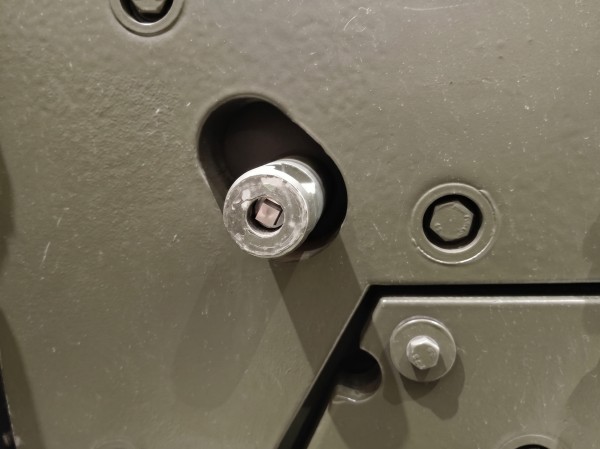
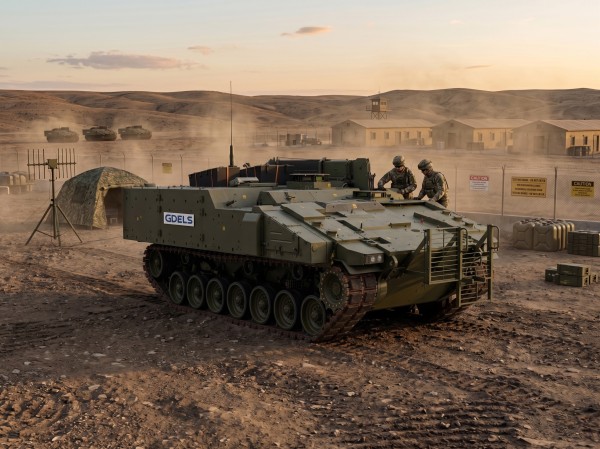
Combat damage repair: GDLES vehicle door axis
The team executed a direct repair on an axis supporting the rear access door of the GDLES vehicle.
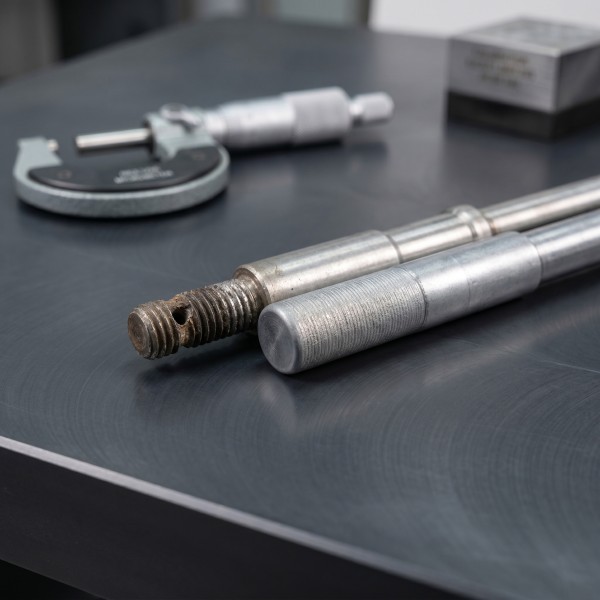
- The challenge: This component suffers constant wear because it supports a heavily weighted door. During maintenance, the thread was damaged, making assembly impossible. Traditionally, this is manufactured by turning an oversized bar stock.
- The solution: Meltio eliminated the damaged area entirely and the geometry was rebuilt with 316LSi Stainless Steel.
Direct combat damage repair
The total print time was precisely 41 minutes and 12 seconds, requiring only 21 minutes and 57 seconds of active laser operation.
Spare part delocalization: Land Rover brake pedal
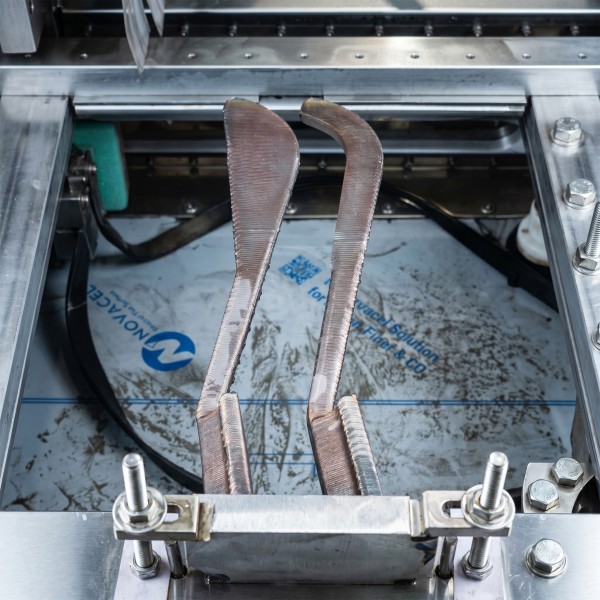
The deployment successfully manufactured a complete Land Rover pedal for the UK Army.
- The process: The workflow involved printing the complete main body, cutting the supports, and subsequently adding the specific protrusions required to hook the pedal.
- Material selection: The component was manufactured using 17-4PH steel. Engineering selected this alloy for its fatigue resistance and high Ultimate Tensile Strength. Additionally, it offers excellent corrosion protection, a vital characteristic for a component constantly exposed to mud in field operations.
Complete supply chain delocalization for legacy components
Print time: 16h 17s in SS 17-4PH
On-demand tooling: Tank track wrench
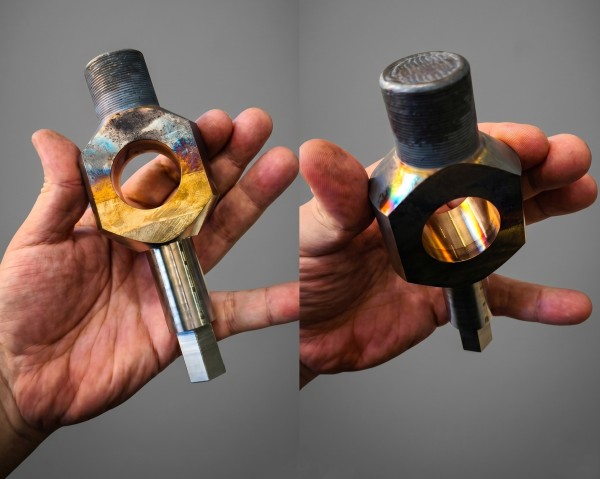
The team produced a specialized tool used to remove tank tracks.
- The challenge: The tool is conventionally manufactured by machining with excessive material waste and it’s subject to wear requiring frequent replacement.
- The solution: The wrench was printed strictly on demand, directly from the digital file.
Eliminates the need for forging logistics and drastically reduces raw material waste
Print time: 58m 52s in SS 17-4PH
4. Strategic advantages of Wire Laser Metal Deposition in Defense logistics
The integration of Meltio technology into military supply chains provides definitive logistical advantages.
Operational efficiency
- 90 percent cost reduction: The Meltio M600 system demonstrated the ability to execute part repairs for 40 to 50 euros, replacing the need to purchase new components with an order of magnitude more expensive.
- Rapid tactical response: Wire Laser Metal Deposition delivers significantly faster programming and setup times compared to other alternatives.
- Supply chain delocalization: The technology allows forces to manufacture complete parts directly in the field, eliminating the reliance on extended global supply networks.
- High exportability: Repair workflows developed for one military branch can be immediately scaled across allied nations, utilizing the same hardware platforms.
Advanced manufacturing capabilities
- Tactical material versatility: The systems successfully process a diverse range of rugged materials natively, including various steels and aluminum grades.
- Superior metallurgical performance: Manufactured components exhibit high mechanical properties, ensuring or surpassing the durability of the original.
- Environmental resilience: Printed parts utilizing materials like 17-4PH steel provide critical corrosion protection for components exposed to mud and severe field conditions.
- Resource optimization: On-demand printing eliminates the need for stocking different material formats in large quantities and prevents large quantities of material waste.
Field deployment
- Direct combat damage repair: Engineers can remove damaged sections of critical infrastructure and rebuild the exact geometry using materials like 316LSi steel, returning vehicles to operation without requiring total part replacement.
- Containerized integration: The hardware is actively being integrated into mobile, deployable containers to provide genuine point-of-need manufacturing solutions.
- Comprehensive workflow execution: The technology supports a complete logistical loop at the point of need, encompassing scanning, printing, post-processing, and final certification.
5. Expanding point of need logistics
The defense market is looking toward a full workflow requirement that includes scanning, printing, post-processing and testing at the point of need. There is a surging demand for containerized remote solutions.
The integration of Wire Laser Metal Deposition into mobile and containerized environments shifts military logistics from a predictive inventory model to an active production model. By eliminating powder hazards and optimizing usability, defense forces can now secure their supply chains directly at the operational edge.
FAQs
Our technology offers a massive operational advantage over Wire Arc Additive Manufacturing by requiring significantly faster programming and setup times. This ease of use allows defense personnel to deploy the technology quicker and produce parts faster in tactical environments.
Yes. Our hardware is designed for point of need manufacturing. During the EDA workshop, we successfully operated five different systems, including running machinery directly from a mobile unit. We are also actively collaborating to integrate our systems into deployable, containerized logistical solutions.
The technology processes a wide variety of materials, including various steels and aluminum, making it highly versatile for rugged military applications. Field applications include repairing heavy structural vehicle components like ASCOD door axes , delocalizing spare parts like tactical vehicle brake pedals , and printing specialized tank maintenance tooling on demand.