
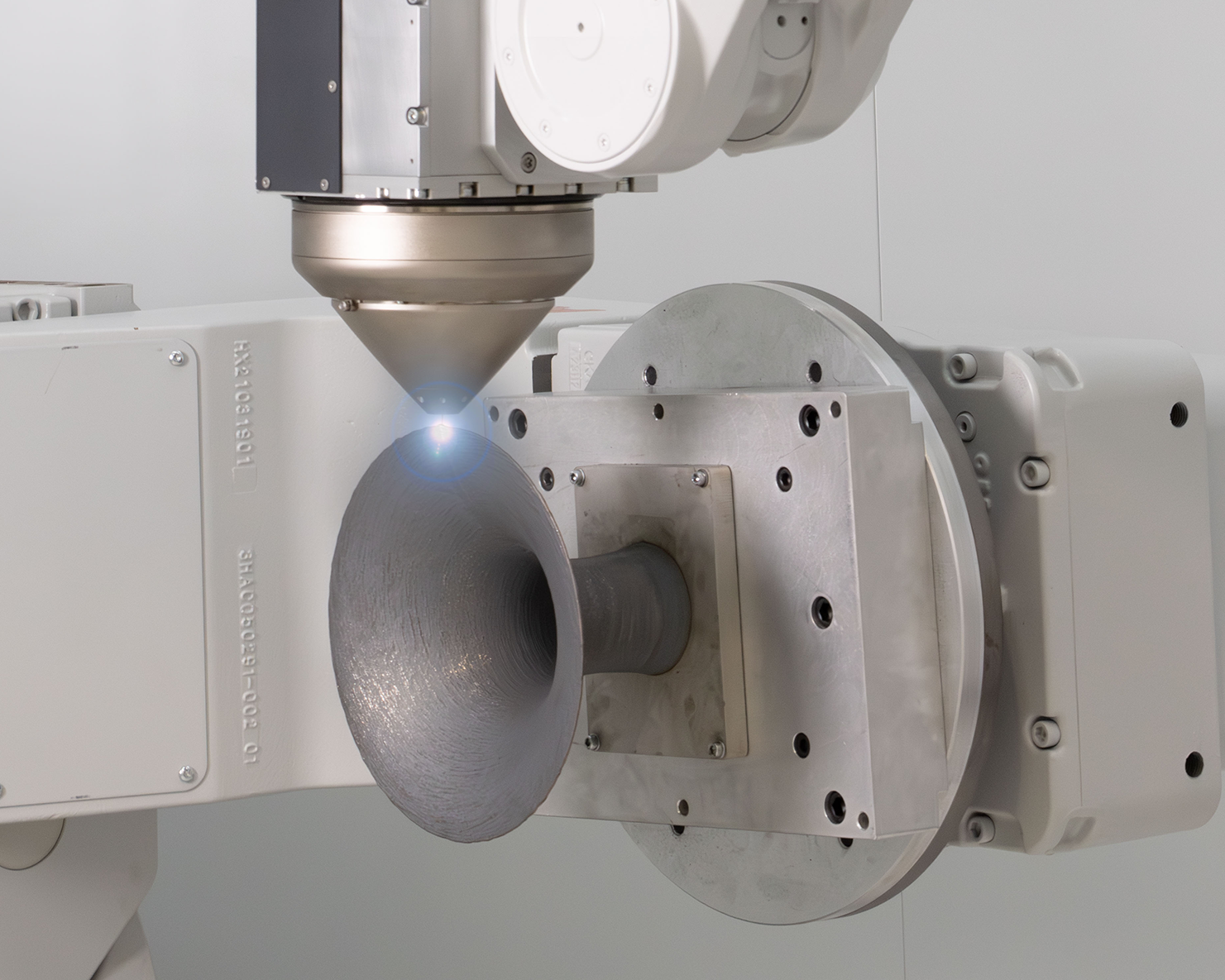

Additive Manufacturing (AM), formally defined by ASTM F2792, is the process of joining materials to make parts from 3D model data, usually layer upon layer, as opposed to subtractive manufacturing methodologies.
While often used interchangeably with "3D Printing," in an industrial context, AM refers to the professional production of functional components, bridging the gap between digital design and physical reality.
This blog will explore the groundbreaking potential of additive manufacturing, delve into the distinctive strengths of DED technology, and showcase how Meltio’s WLM-DED process is redefining what’s possible in industrial applications.
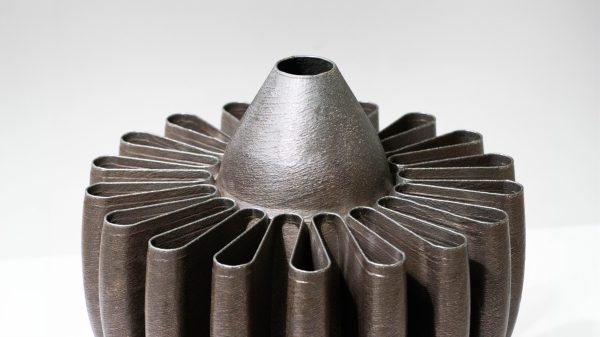
1. The 7 categories of Additive Manufacturing
Additive manufacturing (AM), commonly referred to as three-dimensional (3D) printing, is recognized as one of the twelve disruptive technologies driving the fourth industrial revolution (Industry 4.0).
There are seven main types of 3D printing technologies, along with over 20 subtypes. These include Material Extrusion, Vat Polymerization, Powder Bed Fusion, Material Jetting, Binder Jetting, Directed Energy Deposition, and Sheet Lamination. In particular, powder bed fusion (PBF) and directed energy deposition (DED) are two key AM processes used to produce industrial components.
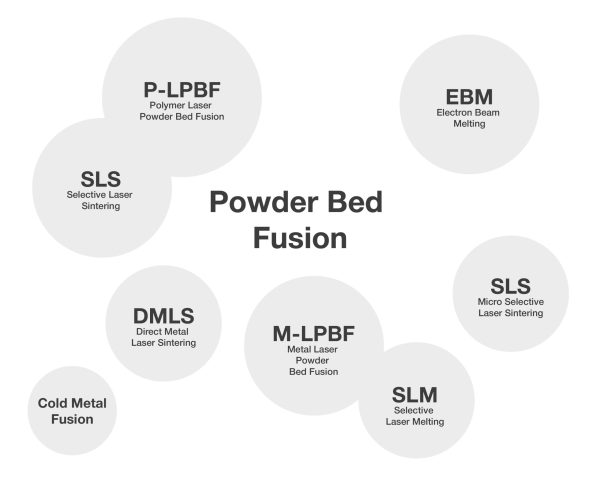
In the category of Powder Bed Fusion (PBF) techniques, a thin layer of metallic powder is spread over the build platform, and a laser or electron beam selectively melts the powder to create the desired shape one layer at a time. The process is repeated for each layer until the final part is complete.
Within the Powder Bed Fusion, metallic additive manufacturing processes including Selective Laser Sintering (SLS), Direct Metal Laser Sintering (DMLS), Selective Laser Melting (SLM), and Electron Beam Melting (EBM) fall under this category.
2. Material feedstocks: Powder vs. Wire
The viability of an AM business case often depends less on the printer and more on the material. The feedstock dictates the cost, safety, and mechanical properties of the final part.
1. Powder feedstock (SLM, EBM, LMD-P)
Pros: High resolution, complex internal channels.
Cons: Health hazard (explosive/inhalation risk), high cost ($/kg), requires sealed environments.
2. Wire feedstock (WAAM, LMD-W)
Pros: 100% material capture efficiency, low cost (standard welding wire), clean handling, safer HSE profile.
Cons: Lower resolution compared to powder (requires post-processing).
TIP: Explore our Materials Guide HERE.
3. Directed Energy Deposition (DED): An advanced Additive Manufacturing process
Directed energy deposition (DED) is a branch of additive manufacturing (AM) processes where feedstock material, delivered in the form of powder or wire, is deposited onto a substrate while an energy source—such as a laser beam, electron beam, or plasma/electric arc—simultaneously creates a localized melt pool. This enables the material to be continuously deposited layer by layer.
The process involves precise movements in the X-Y plane to shape each layer according to a preprogrammed geometry. A Z-axis offset, determined by the specified layer height, is introduced incrementally between the deposition head and the substrate. This cycle is repeated to build successive cross-sections of the desired structure.
DED is a complex process influenced by numerous variables that dictate the thermal history and solidification of the deposited material. These factors significantly impact the microstructure, physical characteristics, and mechanical properties of the final component.
Unlike WAAM (Wire Arc Additive Manufacturing), which uses an electric arc and creates a large heat-affected zone (HAZ), LMD-W uses a focused laser bath. This results in:
Precise Heat Control: Lower distortion in the final part.
High Density: Achieving 99.99% density comparable to forged parts.
Dual-Wire Capability: The ability to print two different materials in the same part (e.g., a mild steel core with an Inconel cladding).
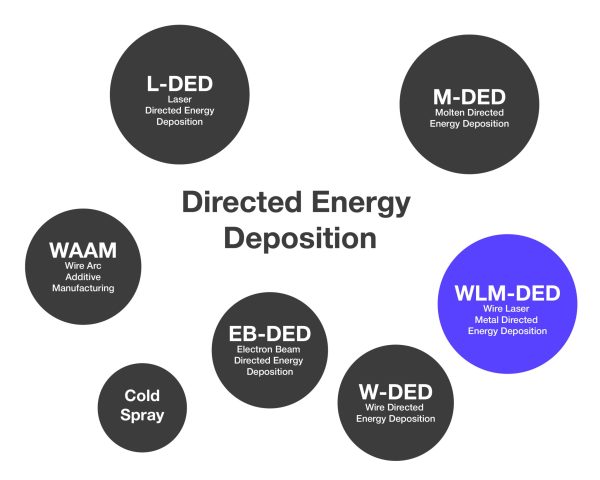
4. Wire + laser, a new DED combination: WLM-DED
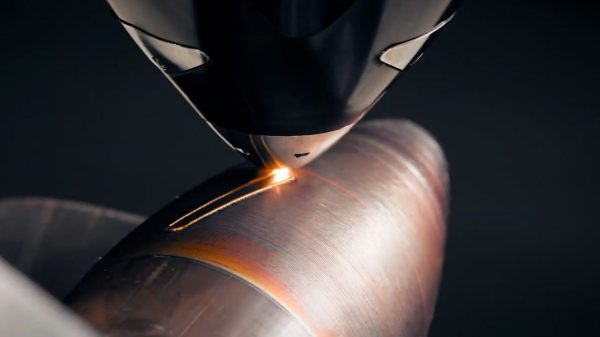
Meltio, a technology within the Directed Energy Deposition (DED) category, specializes in the Wire-Laser Metal DED process (WLM-DED). This laser-based wire feed technology enables the production of “near net shape” parts—components that are close to their final dimensions—requiring only minimal finishing. By significantly reducing the material discarded during rough machining operations, this approach minimizes waste. Coupled with its high input efficiency, the WL-DED process offers substantial savings in both material usage and overall waste associated with traditional machining methods.
The combination of using wire as feedstock and a laser as the energy source in DED is considered a new combination in the context of additive manufacturing due to its unique advantages and recent advancements in technology.
While DED itself has been in use for several years, the specific use of wire feedstock with a laser energy source is a relatively recent development and has gained increasing attention in various industries.
5. Why the industry is shifting to Wire-Laser (LMD-W)
This technology offers distinct advantages and challenges, making it especially suitable for repairing or adding features to existing parts. DED is gaining significant traction in the industry due to its ability to produce near-net-shape, large freeform structures more quickly and cost-effectively than traditional casting and forging methods.
One of the most promising applications of DED is the repair of high-value or unique components. This approach provides a highly economical alternative to manufacturing replacements from scratch. Furthermore, DED enables the integration of different alloys during repairs, enhancing the service life and functionality of the components. These capabilities underscore the transformative potential of DED in modern manufacturing and repair applications.
The transition from prototyping to mass production requires reliability and cost control. Wire-Laser technology addresses the three main barriers to metal AM adoption:
Cost
Uses commodity welding wire, costing up to 10x less than atomized powders.
Efficiency
Near-net-shape manufacturing reduces machining time and material waste by 40-60%.
Integration
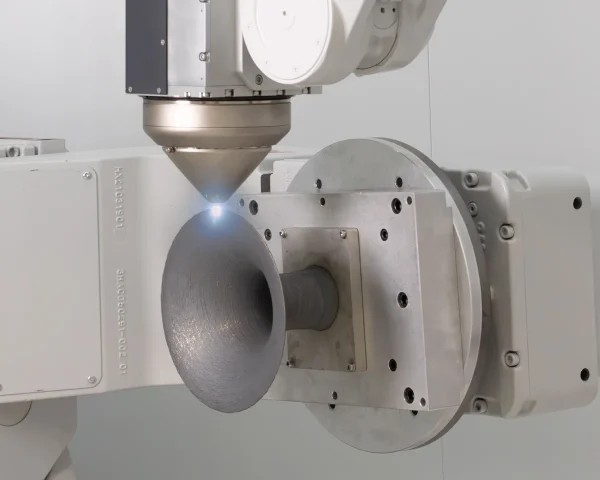
Can be integrated into existing CNC machines (Hybrid Manufacturing) or Robotic Arms, utilizing existing shop floor infrastructure.
6. Why is this Wire-laser metal combination a smart choice?
Here are some reasons why this combination is considered new and noteworthy:
Material versatility
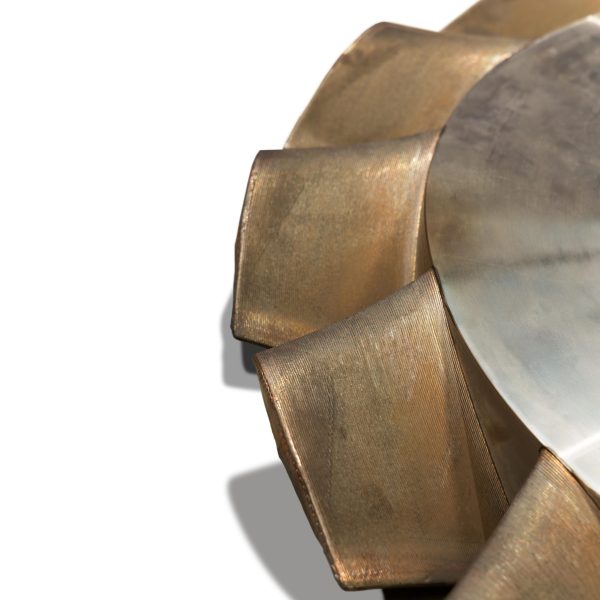
The use of wire feedstock offers a wider range of material options compared to other DED feedstock options, such as powder. This grants the deposition of a broader variety of alloys, making it well-suited for a diverse range of applications across different industries.
Continuos deposition
The continuous feed of wire feedstock during the DED process allows for a seamless and uninterrupted additive build, resulting in increased efficiency and reduced production time. This continuous deposition also eliminates the need for frequent interruptions and manual handling, further streamlining the process.
Large-scale applications
This combination is particularly well-suited for producing large-scale components due to the continuous feed and reduced need for support structures. It allows for the creation of sizable parts with reduced production time and cost-effectiveness.
7. The benefits of Meltio’s WLM-DED process
The use of wire feedstock with a laser energy source in DED has gained momentum in recent years, with increasing research and industrial applications. These features make it a new and promising option in the field of additive manufacturing, generating significant interest and exploration across various industries. Here are some advantages of why Meltio’s process stands out:
- Weight reduction: Meltio technology enables the use of dual materials in manufacturing, allowing for cost-effective production rather than solely focusing on weight reduction. For instance, the internal part can be made from an inexpensive material, while the external part uses a higher-performance material tailored to specific mechanical requirements. Additionally, weight reduction can be achieved through topological optimization, a unique advantage of 3D printing, which minimizes material usage without compromising structural integrity.
- Hybrid manufacturing: Meltio’s hybrid manufacturing capabilities excel in producing parts with challenging geometries, such as curved pipes. This innovative process combines additive manufacturing with machining, enabling seamless transitions between printing and machining cycles. By machining during the printing process, Meltio technology ensures that even areas previously considered difficult to access can be reached and finished to precise specifications.
TIP: Discover Meltio’s hybrid manufacturing system: Meltio Engine Integration Kit for CNC
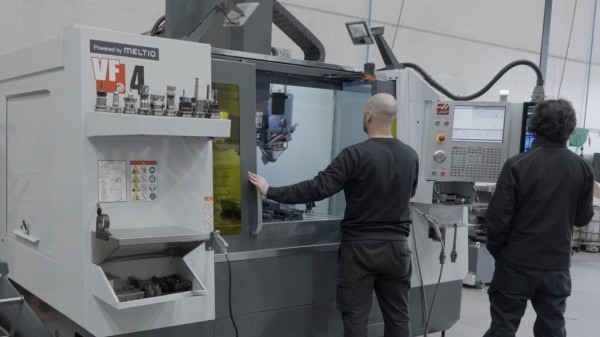
- Large-scale applications: Meltio technology offers an efficient solution for repairing high-value or high-cost parts that have suffered damage. Instead of manufacturing the entire part anew, repairs can restore the component to full functionality, saving time and resources. Additionally, Meltio’s system can print new features onto existing parts, further reducing printing times and material costs. The Meltio Engine makes these processes faster and more economical while maintaining high-quality results.
TIP: Discover Meltio’s robot integration system: Meltio Engine Integration Kit for Industrial robots
8. Applications: Beyond prototyping
Industrial AM is no longer limited to visual models.
Spare parts on demand
Replacing physical inventory with digital files
Tooling & Fixtures
Rapid fabrication of cooling channels and custom jigs
Component repair
Adding material to worn surfaces (shafts, molds) to extend service life, a capability unique to DED processes.
9. Conclusion
In summary, Directed Energy Deposition (DED) and more specifically Meltio’s wire-laser 3D printing technology represents the future of additive manufacturing due to its versatility, cost-effectiveness, and unique capabilities.
By combining laser-based precision with the ability to use wire materials, Meltio WLM-DED enables the creation of high-quality, complex components with reduced waste and material costs. Its compatibility with a variety of metals, ease of integration into existing production environments, and ability to produce both small and large-scale parts make it ideal for industries ranging from aerospace to automotive and beyond. Furthermore, its potential for repair and maintenance applications, alongside scalability and efficiency, positions Meltio DED as a transformative technology poised to redefine manufacturing standards and drive innovation.