In the maritime defense sector, readiness dictates mission success. Whether operating a naval vessel or a mission-critical facility, downtime is unacceptable. Yet, the primary threat to operational continuity is the failure of legacy components. These are parts that are no longer manufactured, difficult to source, or insufficiently robust for modern operational demands.

By utilizing Wire Laser Metal Deposition, the defense industry is restructuring how it approaches the maintenance and production of essential components. This technology delivers solutions engineered specifically for resilience and speed.

1. The issue with legacy parts and supply chain fragility

From impellers to structural fluid management systems, many components used in naval applications are decades old. Traditional manufacturing methods like casting or subtractive machining fail to keep pace when rapid turnaround times and adaptable solutions are required in high-stakes environments.

Meltio systems, including the Meltio M600 metal 3D printer and the Meltio for Industrial Robots integration kit, allow naval engineers to manufacture complex metal parts on demand and on site.

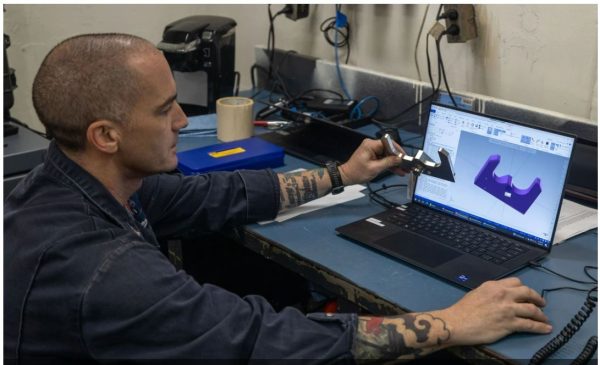
As Staff Sgt. Jordan Blake of the Marine Innovation Unit observed:

“If the crew had to rely on a replacement part without using additive manufacturing, it would have taken weeks or months. With this technology, we’ll have the new component printed and ready for installation before the order for a replacement would be completed”.

Staff Sgt. Jordan Blake, a member of the Marine Innovation Unit.

cnc-us-navy

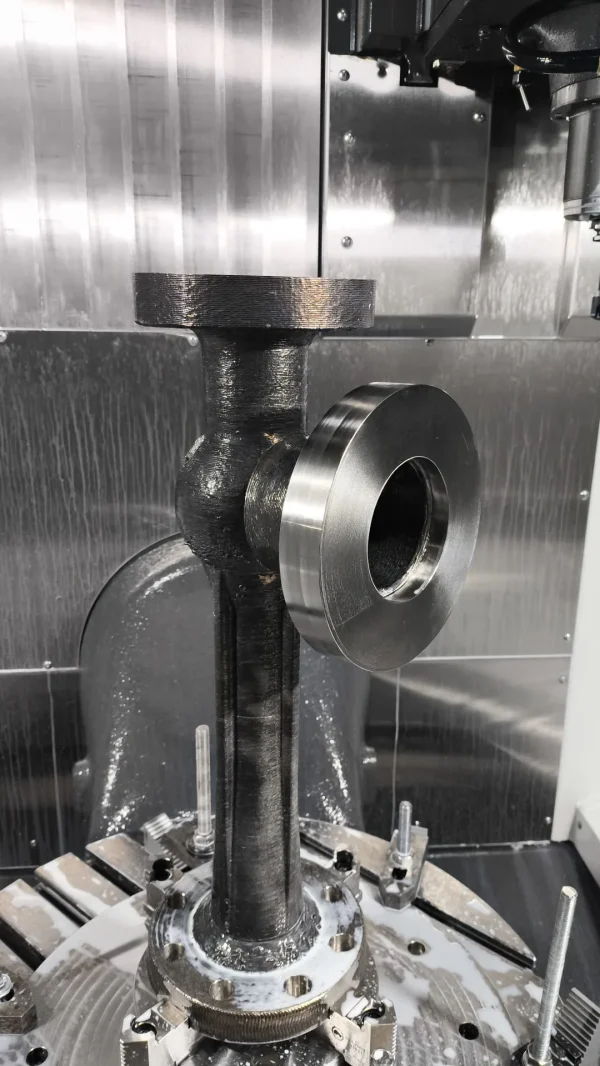
Stainless steel diffuser replacement

A stainless steel diffuser, essential for pressure recovery at a pump outlet, was rendered inoperable after years of hydraulic abrasion and galvanic corrosion.

Problem
No manufacturer could reproduce it affordably or quickly.
Meltio solution
The component was printed in two parts, simplifying the build and allowing for improved wall thickness and mechanical performance. Redundant features were removed, and internal geometries preserved.
diffuser-png

Eductor system optimization

Eductors, which leverage fluid flow to drive secondary movement without additional pumps, are often cast in CuSn or CuNi alloys.

Problem
These parts wear quickly and are challenging to inspect or replace predictively.
Meltio solution
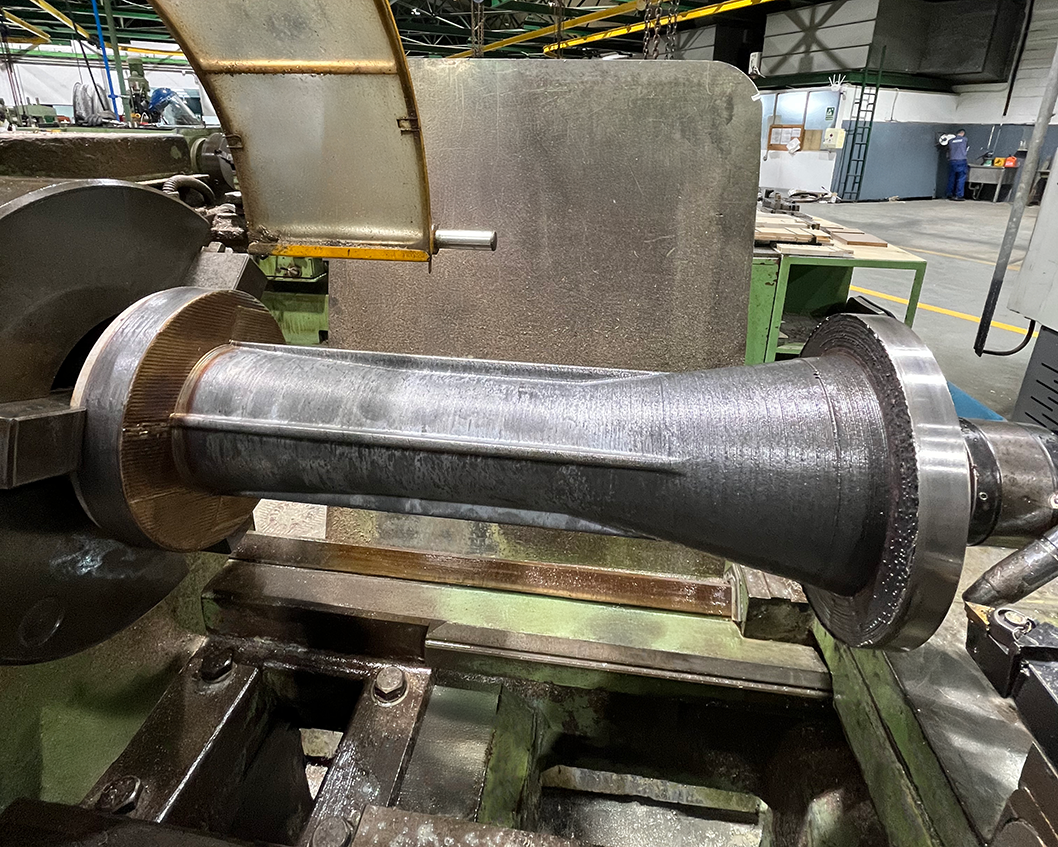
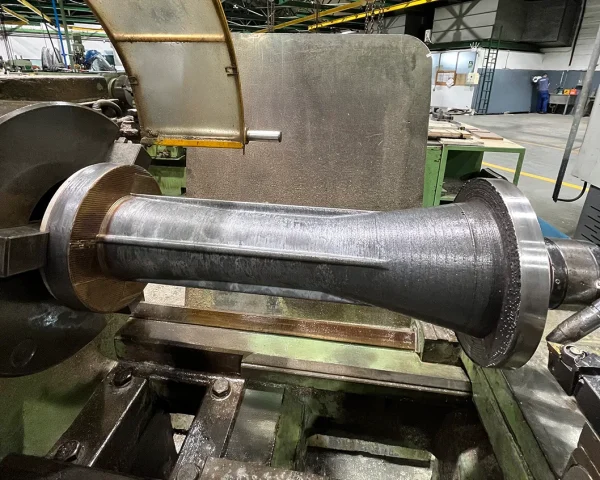
Printed in 316L stainless steel, the new design featured optimized sub-components for post-processing and a second-generation model specifically tailored for additive.
Eductor_defense_application-png

Close Impeller rebuilding

Fire protection systems rely on closed impellers that spin constantly.

Problem
These parts wear quickly and are challenging to inspect or replace predictively.
Meltio solution
Meltio’s additive approach rebuilt the impeller in 316L stainless steel, using a Radial 360 print strategy with custom supports.
Closed-Impeller-1-png

“It has become possible to quickly manufacture repair parts that are discontinued or difficult to procure.”

Republic of Korea Marine Corps

3. Why Defense chooses Meltio

With global threats evolving and critical systems aging, naval defense agencies require tools that guarantee self sufficiency. Meltio provides the hardware necessary to extend the lifecycle of critical maritime systems, shifting logistics from a reactive purchasing model to a proactive digital manufacturing strategy. By producing dense, corrosion resistant parts locally, fleets ensure continuous operational continuity.

french-navy-cnc

4. Trusted by

To know more how Meltio is helping armed forces worldwide, click HERE