Industrial Metal 3D Printers: What is a Metal 3D Printer and how does Wire-Laser DED work?
The adoption of industrial metal 3D printers is no longer a futuristic concept; it is a baseline requirement for modern manufacturing, aerospace, and defense sectors seeking to overcome supply chain disruptions and reduce lead times. Traditional subtractive manufacturing methods involve significant material waste and extensive machining time. Meltio addresses these inefficiencies head-on with our proprietary Wire-Laser Directed Energy Deposition (DED) technology.
Unlike conventional metal additive manufacturing systems that rely on hazardous and expensive metal powders, Meltio’s metal 3D printers utilize commodity welding wire. This approach ensures a clean, safe, and highly cost-effective environment while delivering fully dense, near-net-shape metal parts with exceptional isotropic mechanical properties.
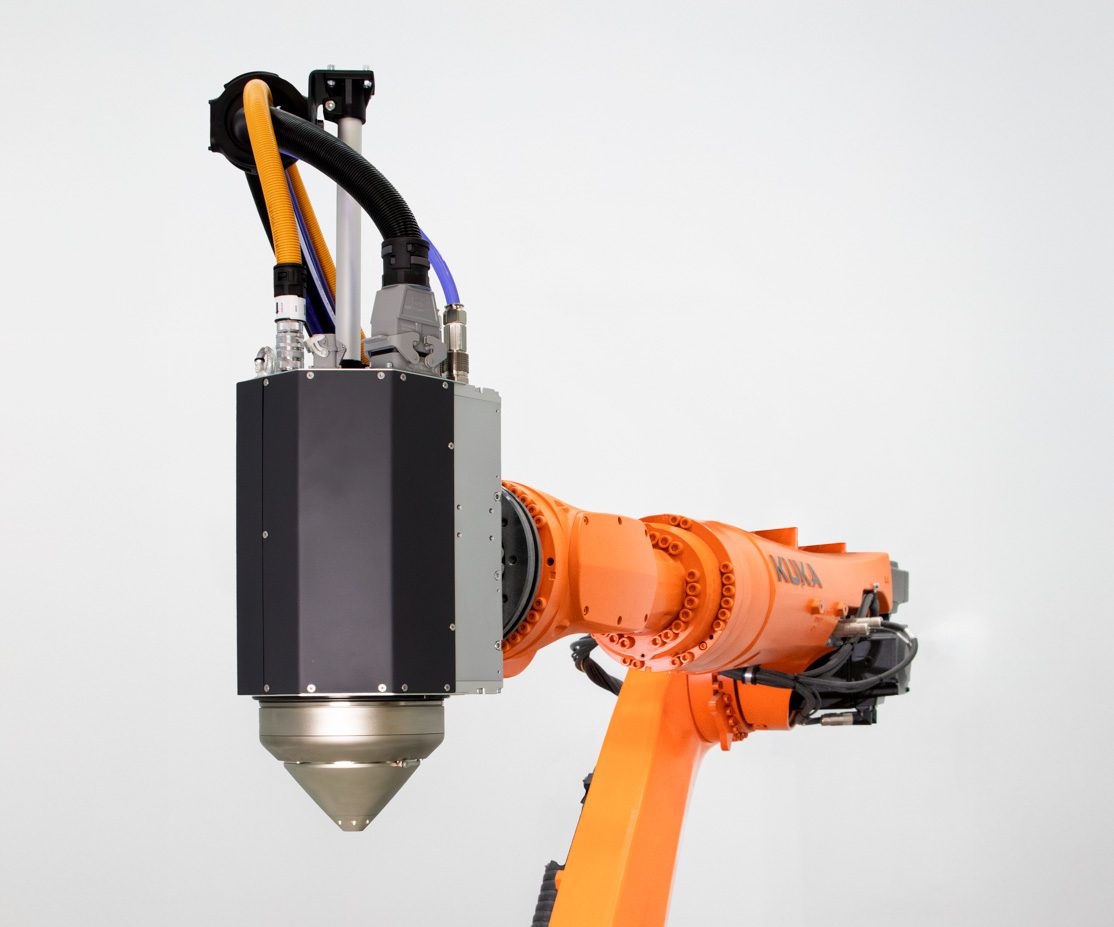
At the core of every Meltio metal 3D printer is our patented coaxial laser deposition head. Multiple high-power diode lasers are precisely aligned around a central wire feed. As the welding wire intersects with the laser focal point, it creates a highly controlled melt pool on the substrate or previous layer.
- 99.97% Fully dense parts: The localized inert shielding gas and precise thermal control minimize porosity, resulting in parts that match or exceed the mechanical properties of cast or forged metals.
- High deposition rates: Depending on the material and parameters, our systems can achieve deposition rates that significantly outpace traditional Powder Bed Fusion (PBF) systems, making it viable for large-scale production.
- Seamless CNC integration: Meltio's technology is platform-agnostic. While we offer turnkey solutions like the Meltio M600, our Meltio Engine can be seamlessly integrated into existing CNC machines or robotic arms, enabling hybrid manufacturing (additive and subtractive in a single setup).
Metal 3D Printing Technologies: Wire-Laser DED vs. Powder Bed Fusion (PBF)
When evaluating metal 3D printers, engineers typically compare Directed Energy Deposition (DED) with Powder Bed Fusion (PBF) and Binder Jetting. Understanding the architectural differences is critical for ROI calculations and facility planning.
| Technical Feature |
Meltio Wire-Laser DED |
Powder Bed Fusion (PBF) |
Binder Jetting |
| Feedstock material |
Commodity welding wire (Lowest cost, clean, zero explosion risk) |
Metal powder (High cost, hazardous handling required) |
Metal powder & chemical binders |
| Part Size scalability |
Virtually unlimited (Scalable via Meltio Robot Cell) |
Strictly limited by the internal build chamber volume |
Limited by build box and sintering furnace size |
| Multi-Metal capabilities |
Yes (Dual-wire capabilities for hardfacing and functionally graded materials) |
No |
No |
| Facility requirements |
Standard industrial / Lab |
Sealed rooms, inert atmospheres, ATEX vacuums |
Printing area + dedicated debinding/sintering furnaces |
High-performance materials for demanding applications
The versatility of a metal 3D printer is dictated by its material compatibility. Because Meltio uses standard welding wire, our users have access to an open material ecosystem, eliminating vendor lock-in. Our print profiles are rigorously tested and optimized for:
- Titanium Alloys (Ti-6Al-4V): Crucial for aerospace and medical applications requiring a high strength-to-weight ratio and excellent corrosion resistance.
- Stainless Steels (316L, 308L, 17-4PH): The backbone of maritime, chemical processing, and general manufacturing due to their durability and weldability.
- Nickel-Based Superalloys (Inconel 718, Inconel 625): Essential for high-temperature applications such as turbine blades and exhaust systems in the aerospace and energy sectors.
- Invar (Invar 36): Known for its uniquely low coefficient of thermal expansion (CTE), ideal for composite tooling and precision aerospace molds.
- Copper Alloys: Used for advanced thermal management components and heat exchangers.
Industrial applications of Meltio systems
Meltio metal 3D printers are actively deployed across the globe, solving complex manufacturing bottlenecks in the most demanding industries.
Aerospace and Defense
In the aerospace sector, the buy-to-fly ratio (the ratio of raw material weight to final part weight) is a critical metric. Subtractive machining of Titanium can result in 80% material waste. Meltio's near-net-shape printing reduces this waste to near zero. Furthermore, the ability to print replacement parts on-demand or repair high-value components directly on a robotic cell provides a strategic logistical advantage for defense operations.
Automotive and Heavy Industry
The automotive industry leverages Meltio for rapid prototyping of engine components and the manufacturing of custom tooling and stamping dies. Utilizing dual-wire technology, manufacturers can print a part in a cost-effective steel and apply a wear-resistant hardfacing layer on critical contact points, drastically extending the lifecycle of the tooling.
Machine Shops and Service Bureaus
For independent machine shops, integrating a Meltio Engine into an existing CNC machine transforms a traditional subtractive workflow into a state-of-the-art hybrid manufacturing cell. This allows service bureaus to take on complex geometries, internal cooling channels, and multi-metal parts that were previously impossible to quote, opening new revenue streams without the footprint of a standalone PBF system.
Frequently Asked Questions (FAQ)
What is the maximum deposition rate of a Meltio metal 3D printer?
Meltio's systems can achieve high deposition rates depending on the material and specific parameters used. For instance, when printing with standard stainless steel or titanium wire, the deposition rate significantly outpaces traditional powder-based systems, optimizing cycle times for industrial production.
Are the 3D printed metal parts fully dense?
Yes. Meltio’s wire-laser DED technology produces parts that are 99.97% fully dense. The microscopic structure of the printed parts exhibits isotropic mechanical properties that are comparable to, and often exceed, those of traditionally cast or forged components.
Do Meltio printers require a special facility setup?
No. Unlike powder bed systems that require hazmat suits, ATEX-certified vacuums, and clean rooms due to the explosive nature of metal powders, Meltio uses safe, easy-to-handle welding wire. Our systems can be installed in standard machine shops, CNC environments, or research laboratories.
Can Meltio technology be used for part repair?
Absolutely. The Meltio Engine, especially when integrated with a Robotic Arm, is ideal for cladding, hardfacing, and repairing high-value components. The laser head can deposit new material directly onto existing worn parts, such as turbine blades or injection molds, restoring them to original specifications.